Tag: <span>Roofing Technology</span>

Harnessing Existing Technology: A New Era for Roofing Contractors

In the roofing industry, technology is not just a tool but a catalyst for transformation. The latest episode of the Roofing Technology Think Tank podcast, hosted by Karen Edwards, explores this very topic with insights from Wendy Marvin, CEO of Matrix Roofing and president of the RT3 Board, and Elliott Wittstruck, founder of Contractor CTO.

Wendy emphasizes the importance of customer service in construction, stating, “We are a customer service company that does roofing. Technology helps us focus on what truly matters—our clients.” This perspective highlights the shift from merely using technology to integrating it into the core of business operations to enhance client relationships.

Elliott sheds light on a common misconception in the industry: the need for more software. “Contractor CTO is about building solutions that make your existing tech work harder for you, not adding more complexity. It’s about leveraging what you already have to maximize efficiency without the need for additional software,” he explains. This approach not only reduces costs but also streamlines processes, allowing contractors to focus on growth and innovation.

Karen Edwards, the host, encapsulates the essence of the discussion: “It’s about educating and helping others in the industry. The right tech can elevate your business to new heights.” Her words serve as a reminder that the true power of technology lies in its ability to empower businesses to reach their full potential.

As the conversation unfolds, it becomes clear that the future of construction lies in the strategic use of technology. By focusing on customer experience and operational efficiency, contractors can not only survive but thrive in this competitive landscape. For more insights and stories from industry leaders, subscribe to the Roofing Technology Think Tank podcast.

Transforming Roofing Estimating and Project Management

In roofing and construction, technology plays a pivotal role in streamlining operations and enhancing efficiency. Recently, Karen Edwards from the Roofing Technology Think Tank podcast sat down with Eric Fortenberry, founder and CEO of JobTread, to discuss how his platform is revolutionizing the construction industry.

Eric’s journey began with the creation of his first software company, which he sold in 2015. He then joined a construction company where his hands-on experience in running the business led to the development of JobTread, a platform designed to address the common challenges faced by contractors. “We built this thing out of a needs basis,” Eric explains, emphasizing the importance of understanding the problem to create effective solutions.

JobTread is not limited to roofing; it caters to various construction trades, from commercial builders to luxury remodelers. Eric highlights the platform’s flexibility, allowing contractors to customize processes and workflows to suit their specific needs. This adaptability is crucial in an industry where no two projects are the same.

One of the key advantages of JobTread is its ability to integrate with third-party applications, providing a seamless experience for contractors. From estimating to project management, the platform offers tools that enhance efficiency and improve communication between sales and production teams. “It’s about creating a connected ecosystem,” Eric notes, underscoring the importance of collaboration in achieving project success.

JobTread’s commitment to transparency extends to its pricing model, which has remained consistent for years. Eric believes in providing affordable software solutions without compromising on quality. Additionally, the platform offers extensive support, including dedicated customer success managers and a vibrant user community.

As the construction industry continues to embrace technology, platforms like JobTread are leading the way in transforming how contractors manage their businesses. With a focus on customization, integration, and transparency, JobTread empowers contractors to build profitable and scalable operations. For more insights, subscribe to the Roofing Technology Think Tank podcast and stay updated on the latest trends in construction technology.

Navigating Building Codes with OneClick Code: A Game-Changer for Contractors

Staying up-to-date with building codes is a daunting task. Imagine a tool that simplifies this process, providing accurate, defensible data at your fingertips. Enter OneClick Code, a revolutionary technology transforming how contractors navigate building codes.

The Challenge of Building Codes

Every jurisdiction has its own set of building codes, which can change frequently. This complexity often leads to confusion and errors, impacting contractors and homeowners alike. Bin Wright, Enterprise Solutions Manager at OneClick Code, shares, “Approximately 54% of all estimates have some sort of error. This isn’t a people problem; it’s a data problem.”

OneClick Code: The Solution

OneClick Code addresses this challenge by offering a verified, citation-backed answer key for building codes, taxes, and permit fees. By simply entering an address, contractors receive accurate jurisdictional data, eliminating guesswork and ensuring compliance. “Think of it like checking your math on a calibrated calculator,” says Wright.

Impact on the Industry

The impact of OneClick Code is profound. Contractors can now produce estimates with confidence, knowing they are backed by defensible data. This not only streamlines the approval process but also builds trust with clients and insurance carriers. As Wright notes, “We provide this report in a matter of seconds, making the process more efficient and accurate.”

Looking Ahead

While currently focused on roofing, OneClick Code hopes to expand into other areas like mechanical, electrical, and plumbing codes. This expansion promises to further simplify the construction process, making OneClick Code an indispensable tool for contractors nationwide.

Navigating building codes no longer needs to be a headache. With OneClick Code, contractors can focus on what they do best, armed with the knowledge that their data is accurate and defensible. As the construction industry continues to evolve, tools like OneClick Code are leading the way, ensuring that contractors can work smarter, not harder.

Revolutionizing Roofing: The AI Integration That’s Changing the Industry

In the ever-evolving world of technology, the roofing industry is experiencing a transformation like never before. James Turner from Best Roofing shares his journey of integrating AI into his business, highlighting the profound impact it has had on efficiency and growth.

James Turner, a pioneer in leveraging AI for roofing, explains how his company was among the first to adopt AI voice technology. “We had to be one of the very first roofing companies in the country to get AI for voices,” he shares. Initially, it handled basic tasks like scheduling, but now it can send payment links, book appointments, and even provide quotes over the phone. This automation has streamlined operations, allowing his company to thrive with minimal staff.

Scaling with AI

Turner has successfully scaled his business without the need for additional staff. “In five years, we’ve only kept one sales rep and one virtual office assistant,” he notes. The AI-driven processes have allowed the company to handle more work efficiently, enabling them to focus on building relationships and maintaining high-quality service. “The roofing company almost runs itself,” Turner adds, highlighting the power of technology in modern business operations.

The Future of Roofing

The integration of AI doesn’t stop at administrative tasks. Turner envisions a future where drones and robots handle physical installations, addressing labor shortages and enhancing precision. “There will come a day when that’s the norm,” he predicts. While AI won’t replace the human touch in sales and relationships, it will undoubtedly make other processes more efficient. As AI technology continues to advance, the roofing industry stands on the brink of a new era. Companies like Best Roofing are leading the charge, demonstrating that with the right tools, the possibilities are endless. Subscribe now to stay updated on the latest in roofing technology and innovation.

Embracing Agile Methodology in Roofing: A New Era of Efficiency

In the ever-evolving world of roofing, staying ahead requires more than just traditional methods. Enter Agile methodology—a concept borrowed from software development that’s making waves in the roofing industry. As Ben Fiedler from Benchmark explains, Agile isn’t just a process; it’s a mindset that allows roofing professionals to adapt quickly to changing environments and client needs.

Agile methodology, with its roots in software development, emphasizes flexibility and rapid response to change. Unlike the traditional “waterfall” approach, which follows a linear path, Agile allows for iterative progress and continuous feedback. This is particularly beneficial in roofing, where unexpected challenges can arise, and quick adaptation is crucial.

Real-world example

Ben shares a compelling example of Agile in action. Faced with a tight deadline and material shortages, his team adopted an Agile mindset to complete a 117,000 square foot roofing project. By collaborating closely with contractors and prioritizing tasks, they were able to meet the client’s needs efficiently. This approach not only saved time but also minimized waste—a key principle of Agile.

Technology and Agile

Technology plays a pivotal role in implementing Agile in roofing. From drones for inspections to software for project management, the right tools can enhance efficiency and decision-making. However, as Ben cautions, technology should solve specific problems rather than being adopted for its own sake. Identifying the root issue is essential before integrating new tech solutions.

Agile helps you stay competitive

Agile methodology offers a fresh perspective for roofing professionals, enabling them to navigate challenges with ease and deliver exceptional results. As the industry continues to evolve, embracing Agile could be the key to staying competitive and innovative. For those interested in learning more, resources on Agile, Lean, and Scrum are readily available online.

Subscribe now to our podcast for more insights into the intersection of technology and roofing. Stay ahead of the curve and transform your approach with Agile methodology.

How mushrooms are upcycling construction debris

A sustainable approach to waste management.

Members of the Roofing Technology Think Tank (RT3) recently visited the headquarters of Mycocycle in the Chicago area, where they met with founder and CEO Joanne Rodriguez to explore an innovative solution to a major construction industry challenge: waste.

During the visit, Joanne explained that construction materials account for 11% of global greenhouse gas emissions, spanning the entire lifecycle from resource extraction to disposal. While traditional waste management often depends on landfill or resource-heavy recycling processes, Mycocycle is taking a radically different approach — using mushrooms, nature’s own recyclers, to break down construction debris and reduce its environmental impact.

“So why mushrooms?” asks Joanne. “There is a huge body of work around micro remediation as a form of bioremediation. We’re not the first to do it, we’re just the first to do it in an industrial application.”

Mushrooms are known for their remarkable ability to decompose organic matter, thanks to their network of mycelium — tiny thread-like structures that act as nature’s decomposers. Mycocycle taps into this biological power to upcycle debris that would otherwise be discarded.

How it started

After spending nearly 20 years in the commercial roofing industry and being tasked with leading a recycling program for the manufacturer, Joanne realized that recycling in the roofing industry was not even close. Once she turned 50, she realized she wanted to “do better” and do something about this issue so she set out on her own.

“When I went independent, I went on a quest for knowledge, as well as to beef up my skills,” explained Joanne. “I took a course from Oregon State University, and I learned about fungi and their remediative qualities.”

“When I learned about the heavy hydrocarbons that they could cycle through, just like those we find in petrochemicals and bitumens that are going into our products, I connected with a mycologist, which is a specialist in fungi, and we put a handful of spores on some off-the-shelf asphalt roof shingles, and it grew within seven days.”

Joanne formed a company and filed a patent for that process. After meeting our own Heidi J. Ellsworth in 2018, Joanne worked to secure funding and support from leading roofing industry players but was met with skepticism and doubt. Convinced that this process would work, Joanne incubated and accelerated the company in 2019 and launched through the National Renewable Energy Labs in March 2020. After receiving validation of the problem, the Covid pandemic shut everything down, slowing down her momentum.

“I started to try to find people,” said Joanne. “I’m not a scientist, I’m just curious, trying to solve a problem.” Within a year of leasing her first space, they had outgrown it. “Today we’re in over 10,000 square feet. We have another 10,000 square feet we’re expanding to in Georgia, and we have many installations via our Mycontainers. The whole goal for us is to upcycle waste from the built environment.”

Upcycling old carpets

The one industry where Mycocycle has gained traction is the carpet industry. “One thing I wanted to solve was how we could upcycle or reuse the waste more effectively and how we could get greener, cleaner chemicals to do that.”

The carpet industry is seeing a lot of emerging regulations, says Joanne. “They haven’t hit the roofing sector yet, but they are hitting the flooring sector very hard. Within the next three years. Things like commercial carpets must have at least 5% recycled content from their industry. It can’t come from PET water bottles.”

“We’re able to reduce the embodied carbon of materials by 98% for carpet specifically. We are coming from commercial carpet waste and producing a Nylon 6 replacement. Our products are competitively priced and outperform petrochemicals today. That’s one of my very big points of pride that we’re able to compete against virgin polymers and win. We are defining a new category of materials management.”

The process and result

The Mycocycle process begins with sorting and preparing construction waste. Materials are selected based on their compatibility with the fungi’s decomposition capabilities. Once prepared, the debris is inoculated with specific strains of fungi that thrive on the chosen substrates. Over time, the fungi metabolize the waste, breaking it down into simpler compounds.

The end result is a transformed material that can be used for various applications, such as bio-based building materials, insulation or soil amendments. This innovative process not only reduces the need for landfill disposal but also creates sustainable products that can re-enter the construction cycle.

This summer an athletic field is being installed in South Carolina that will be the first carbon neutral athletic field. One of the largest suppliers of athletic turf is using MycoFILL, upcycled from old carpet, in the manufacture of their turf infill that not only keeps the field cooler and is safer for athletes, but eliminates the need for using rubber and microplastics in their manufacturing process.

Implications for the future

Mycocycle’s work represents a significant step forward in sustainable waste management. By harnessing the natural capabilities of mushrooms, the company is addressing one of the construction industry’s most pressing problems in an innovative and environmentally responsible way. As the technology gains traction, it has the potential to revolutionize how waste is handled across multiple industries, setting a precedent for bio-based solutions to global challenges.

In a world where sustainability is increasingly critical, Mycocycle stands as a shining example of how nature and technology can work hand in hand to create a better, greener future.

RT3 Member Mycocycle Raises $3.6 Million to Transform Waste into Sustainable Raw Materials with Fungi

Seed extension comes as company triples R&D footprint and raises production capacity to 40 metric tons of material treated per month.

CHICAGO, May 08, 2024 — Mycocycle, a nature-inspired, woman-owned biotechnology company that uses fungi to transform organic waste into reusable materials, today announced an oversubscribed $3.6 million Seed extension. Closed Loop Partners’ Ventures Group led the round with follow-on investment from the TELUS Pollinator Fund for Good and participation from U.S. Venture, Inc. and the Illinois Department of Commerce and Economic Opportunity INVENT Fund.

The funding brings Mycocycle to $7.3 million raised to date and follows the company’s announcement of a $2.2 million Seed round one year ago.

Mycocycle will use the funding to deepen relationships with existing partners for waste materials, further scale its waste-to-value chain, and make key leadership hires for marketing, technology, and operations teams.

Compared to May 2023, Mycocycle now completes over 10 times as many mycelium-based treatments per month. The company’s bioremediation process blends the treatment with built environment waste (asphalt shingles, rubber, gypsum boards, insulation lining, and old textiles) and transforms it into non-toxic, high-quality raw materials.

This circular waste-to-value system diverts some of the roughly 145 million tons of construction debris sent annually to landfills and decarbonizes a sector responsible for nearly a third of annual U.S. greenhouse gas emissions.

Mycocycle also helps reduce emissions that are associated with a company’s value chain but outside of its direct control. These emissions, called Scope 3 emissions, come from upstream activity (like raw material production and transport) and downstream activity (like waste disposal). Scope 3 emission reduction is a critical piece of zero-waste corporate responsibility programs.

“Mycocycle helps decarbonize the construction material supply chain through a cost-effective, sustainable process that produces useful raw material for the building industry,” said Joanne Rodriguez, founder and CEO of Mycocycle. “Further, the unique characteristics of mycelium lead to materials that are lightweight, thermally insulating, fire-retardant, and water-repellent.”

There are two main parts of Mycocycle’s circular business model:

Mycelium treatment: Mycocycle helps its customers use fungi to break down and detoxify waste materials at their own demolition or construction sites. Some waste types, like carpet, are treated at the same cost of incineration and other environmentally harmful disposal methods.

Raw material production: Mycocycle produces harvestable raw materials that can go into products like industrial fillers, fibers, or foams. Because they require less energy to go to market, these materials are more sustainable than their counterparts made from plastic polymers or petroleum chemicals.

“Mycocycle embodies Closed Loop Partners’ advancement of a truly circular economy and paints the vision for how rapid decarbonization of the construction supply chain can be profitable for companies today,” said Aly Bryan, Investor at Closed Loop Partners’ Ventures Group. “We are excited to partner with the Mycocycle team in the next phase of growth for the business and to ultimately enable more circular and local processing and production technologies for materials in the built world.”
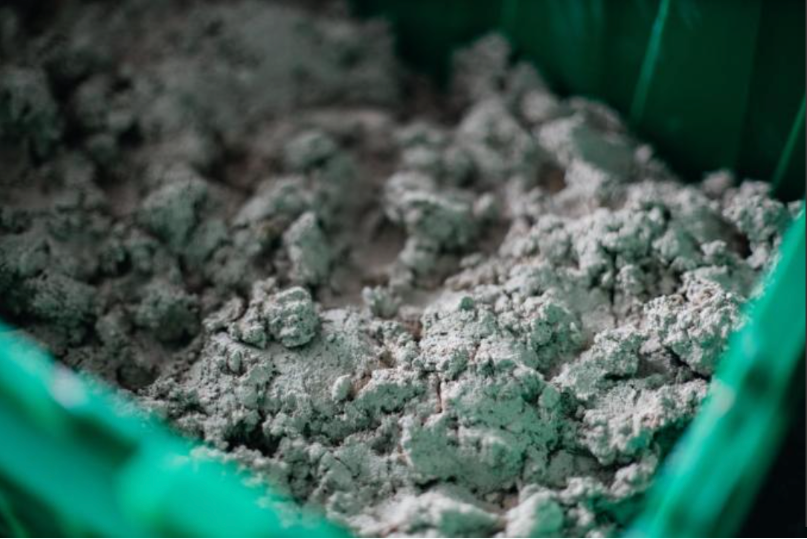
Treated gypsum waste sits ready for use in industrial fillers and foams. Image Credits: Mycocycle

About Mycocycle
Mycocycle, Inc. is a nature-inspired and woman-owned biotechnology startup that leverages fungi to transform industrial waste into reusable materials. Founded in 2018, the company drives circularity in the construction supply chain and divert wastes from landfills. Mycocycle blends lab-cultivated fungi with debris at the point of waste generation to transform waste into new raw materials. To learn more, visit http://www.mycocycle.com.
RT3 Member Mycocycle Featured on RE:TV as Inspiring Innovation

RE:TV highlights inspiring innovations and ideas that are emerging in response to the climate and biodiversity crisis.

Mycocycle, Inc., a leader in using mycoremediation to process toxins out of waste was featured in an episode on RE:TV, an initiative founded by His Majesty King Charles III in 2020 at the World Economic Forum (then HRH the Prince of Wales) to spotlight change makers around the world. The platform seeks innovations that are inspired by nature to address the challenges of the climate crisis.

Mycocycle’s process of using fungi to transform waste materials into a reusable resource captured the attention of RE:TV because of its ability to dramatically reduce the negative impact that the construction industry has on the environment. The resulting biomaterial that is produced is both fire- and water-resistant and can be used in the manufacture of many new products, including building materials, resulting in a true closed-loop ecosystem.

“The waste generated in the construction industry takes up space in landfills and can leach toxins into the air, water and soil,” Mycocyle CEO and Founder Joanne Rodriguez explained in the episode. “For every ton of waste that we treat, we are able to reduce CO2 emissions by almost three metric tons.” The Mycocycle spotlight can be watched on RE:TV’s website.

About Mycocycle

Mycocycle, Inc. is a nature-inspired and woman-owned biotechnology startup that leverages fungi to transform industrial waste into reusable materials. Founded in 2018, the company is on a mission to drive circularity in the construction supply chain and divert waste from landfills with its innovative solution. Mycocycle blends lab-cultivated fungi with debris at the point of waste generation to detoxify hard-to-recycle building materials and turn them into new raw materials. Its customers include companies across the waste management, recycling, and manufacturing industries, as well as companies focused on reducing Scope 3 emissions.

In 2023, Mycocycle was issued a Declare label for its “MycoFILL© G” materials through the International Living Futures Institute, which recognized its products as Red List Chemical Free. Mycocycle is a FastCompany World Changing Ideas finalist and its CEO has been honored as a Environment + Energy Leader Top 100 Leader, Crain’s Chicago Top 50 Sustainability Executive and named to the inaugural Forbes Next 1000 list. To learn more visit www.mycocycle.com.

RT3 members represent the industry at SkillsUSA 2023

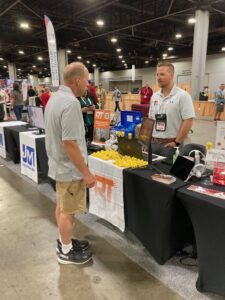
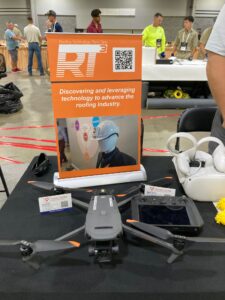
This was the first year that roofing was included in the SkillsUSA national championship and members from RT3 were there to showcase technology in the roofing industry including drones, 3D modeling and virtual reality.

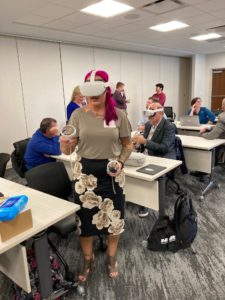
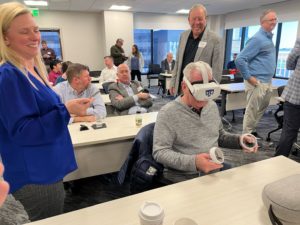
At the Roofing Technology Think Tank (RT3) table, members were showcasing drone technology and 3D building modeling. Attendees could don an Oculus headset and experience what it’s like to be on the roof of the building in the 3D model. The team from Imagine Technologies and Division 7 Roofing was there to answer questions and fly the drone during a demo period.

The National Roofing Contractors Association was instrumental in working with SkillsUSA to include roofing as part of the competition this year. Heidi Ellsworth from RoofersCoffeeShop and RIck Damato of Roofing Contractor magazine worked together to secure donated materials and support for the roofing competition.

Four teams from across the country competed in the commercial roofing competition on Wednesday, June 21 under the guidance of skilled technicians from IB Roof Systems. The teams took a written test on the first day and then headed to the competition area to practice what they had learned in preparation for the competition the following day. First place was taken home by Kansas!

The first day of the Techspo saw crowds of students, teachers and family members learning from vendors about products and services they offer to the industry. In the roofing pavilion, attendees were able to experience both low-slope and steep-slope roofing installation methods.

In the low-slope demo area, they learned how to weld a seam on TPO with a handheld welder under the tutelage of experts from Johns Manville. After welding, the JM team tested the strength of the weld. On day two, students can compete in the seam welding for a chance to win a backpack and other swag from JM. On the steep-slope side, individuals were shown how to run a course of shingles, including installing starter strip thanks to the help of TAMKO. A special thank you to SRS Distribution for getting all the donated materials into the convention center.

National Women in Roofing had a table to share information on the organization and encourage the young women in attendance to consider the roofing industry as a viable career option.

We were really excited to be able to share the technology of the industry with the next generation of workers and are looking forward to next year!